



Singapore Working Holiday Visa - A Complete Guide For 2026
by Jessie Chambers a year ago
10 MIN READ
This guide was updated on 1st of August 2026.
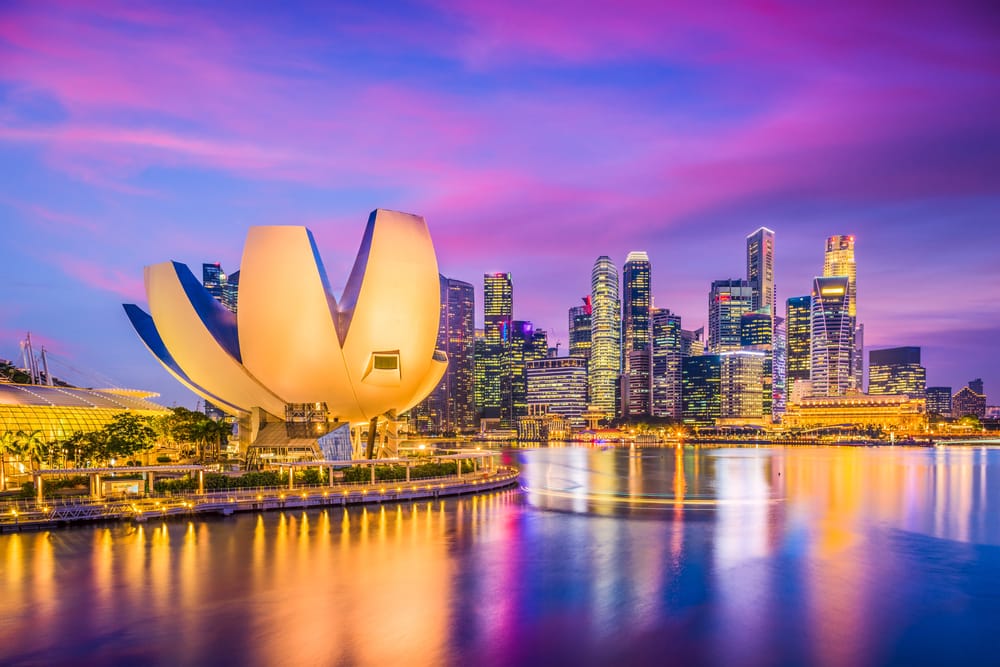
You land, the doors slide open, and the heat greets you like an old friend who hugs a little too long. Welcome to Singapore, where the air is thick, the kaya toast is warm, and your entire sense of what a city can be is about to get quietly rearranged.
This is a place that runs on contradiction and somehow never trips over it. A billion-dollar skyline on one side, a seventy-year-old auntie ladling the best laksa of your life out of a hawker stall on the other. You will eat like royalty for the price of a flat white back home. POV: It's 11 pm at Lau Pa Sat, you've got a plate of satay and a sugarcane juice in front of you, and you cannot think of a single place you'd rather be.
The country is notoriously known for its clean and safe vibe, the efficiency and ease of living and the locals being extremely lovely and welcoming. For anyone that wants an epic and approachable year for their Working Holiday, Singapore is tough to beat.
What the Work Holiday Pass Actually Is
So what is it, really? Singapore's Working Holiday Visa is officially called the Work Holiday Pass. It lets eligible university students and recent graduates live, work and travel in Singapore legally for a set stretch of time, with no need to line up a job before you arrive.
Here's the bit most guides skim over: there are two versions, and they are not the same. The standard Work Holiday Programme runs for six months and is open to students and graduates from ten countries. A separate Work and Holiday Visa Programme runs for a full twelve months, but only for Australians and New Zealanders. Same physical pass card, different rule books. We'll break both down below.
Singapore Work Holiday Pass at a Glance
- Who it's for: university students and recent graduates
- Work Holiday Programme: ages 18 to 25, for students and grads from Australia, France, Germany, Hong Kong, Japan, the Netherlands, New Zealand, Switzerland, the United Kingdom and the United States, valid up to 6 months
- Work and Holiday Visa Programme: ages 18 to 30, for Australian and New Zealand citizens only, valid up to 12 months
- Pass fee: S$175, paid when the pass is issued
- Processing time: around 4 weeks for most applications
- Quota: the six-month programme is capped at 2,000 pass holders at any one time
- Where to apply: online, through the Ministry of Manpower
Why Singapore Hits Different
Most working holidays drop you in one country. Singapore quietly hands you a whole region. It sits in the middle of Southeast Asia like a suspiciously well-organised departure lounge, which means Bali is a budget flight away, Bangkok is a long weekend, and Kuala Lumpur is basically a bus ride. Your day-off radius is unhinged in the best way.
Then there's the food, and we have to talk about the food. Chinese, Malay, Indian and Peranakan kitchens all crammed onto one tiny island means you can eat your way across a continent without ever leaving the postcode. Chilli crab on Tuesday, roti prata for breakfast, Hainanese chicken rice that ruins all other chicken rice for you, for all of your days and nights - literally, delicious.
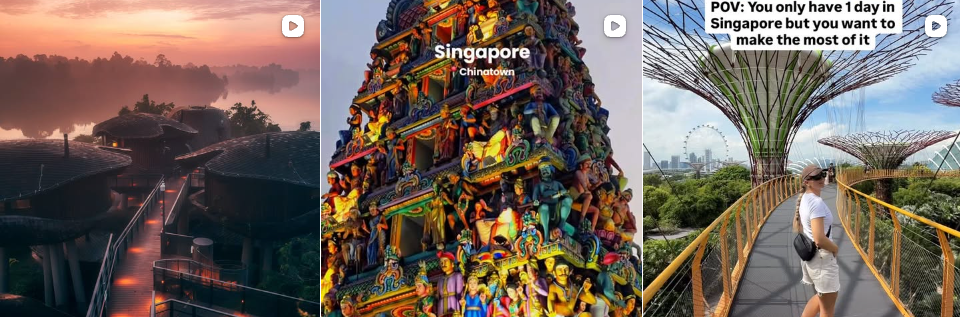
And it's green in a way photos undersell. This is a city that grew a forest through its own skyline and called it a Tuesday. You'll be standing under the Supertrees at Gardens by the Bay convinced you've wandered onto a film set. Tell us you're not a little bit obsessed without telling us.
Visa at a Glance
Singapore runs two working holiday routes, both issued as a Work Holiday Pass. Which one you use comes down to your passport and your age.
The six-month route (Work Holiday Programme)
- Eligibility: undergraduates and recent graduates of a recognised university in Australia, France, Germany, Hong Kong, Japan, the Netherlands, New Zealand, Switzerland, the United Kingdom or the United States
- Age: 18 to 25 at the time you apply
- Study rule: undergraduates must have been a full-time student for at least three months before applying
- Duration: up to 6 months, not renewable
- Quota: capped at 2,000 pass holders at any one time, so timing matters
- Documentation: passport with 6 months validity from arrival date, degree certificates, transcript and letter from university (if you are still studying)
The twelve-month route (Work and Holiday Visa Programme)
- Eligibility: Australian and New Zealand citizens only
- Age: 18 to 30 at the time you apply
- Study rule: a university degree, or the equivalent of two years of full-time undergraduate study
- Duration: up to 12 months
- Work limits: no freelance work, and no more than six months with any single employer
Both routes
- Pass fee: S$175, paid when the pass is issued
- Apply: online, through the Ministry of Manpower
- Reapply: you can only reapply 12 months after you last held the pass
- Regulated professions: fields like medicine, dentistry, pharmacy, architecture and law still require local registration to practise
How to Apply
- Check you're eligible. Line up your age, nationality and student or graduate status against the route that fits you.
- Gather your documents. Your passport details page, plus your degree certificate or transcripts if you've graduated, or a recent university letter and student card if you're still studying. Anything not in English needs an official translation.
- Apply online with the Ministry of Manpower. Create an account, complete the Work Holiday Pass application and upload your documents. You can't apply more than three months before your intended travel date.
- Wait for your outcome. Processing takes around four weeks for most applications. If you're approved, an In-Principle Approval (IPA) letter lands in your inbox.
- Fly in and get the pass issued. You have three months from your IPA to enter Singapore and have the pass issued, which is when the S$175 fee is paid. You'll need a local address and a return ticket out before the pass expires.
- Collect your card. You may need to register your fingerprints and photo, then your digital pass and physical card follow. From there, you're free to work and explore.
Plenty of people work through this solo, and it's very doable. It's admin-heavy and easy to trip on the document rules though, so build in extra time and read the requirements twice.
Your First Week in Singapore
Touchdown is the fun part. The admin that makes the next six or twelve months run smoothly is the boring-but-crucial part, and knocking it out in week one means you can actually relax into the city. Here's the short list.
- Sort accommodation first: lock in at least your first couple of weeks before you fly. Hostels, co-living spaces and short-term shared rentals all buy you time to find something permanent without the post-flight scramble.
- Grab a local SIM: prepaid SIMs from the major local telcos are on sale the moment you land at Changi, so you're connected before you've even left the terminal.
- Get moving on transport: pick up an EZ-Link card, or just tap your contactless bank card on the MRT and buses. Public transport here is fast, spotless and genuinely cheap, and it'll be how you live.
- Open a bank account (optional but smart): one of the big local banks makes managing money easier once you're working. Bring your passport, pass card and proof of address.
- Clear the arrival basics: complete your SG Arrival Card online before you fly, and keep your IPA letter, passport and accommodation details handy for immigration.
Work Life in Singapore
You don't need a job lined up before you arrive. You apply, you land, then you look. Singapore's economy is dense, fast and very used to young international workers passing through, which works in your favour.
- Hospitality and tourism: cafes, bars, restaurants and hotels across the city, the quickest route to a first pay cheque.
- Internships in business and tech: Singapore is one of Asia's biggest corporate and startup hubs, and short placements in finance, marketing and tech look genuinely strong on a CV.
- Events and retail: casual and seasonal roles that flex around your travel plans.
- Your qualified field: you can work in the profession you trained for, as long as you meet Singapore's registration rules for regulated jobs.
Reality Check
Singapore is one of the most expensive cities in the world, and that's the part that catches people out. Rent is the big one: a room in a shared flat or co-living space can eat a serious chunk of your income, so lock in your first few weeks of accommodation before you fly rather than scrambling on arrival. The six-month route's 2,000-place cap means spots can run out, and the months after graduation season see the heaviest demand, so apply early. Healthcare is excellent but costly for non-residents, and the pass gives you no public healthcare access, so cover isn't optional.

What It Costs to Live in Singapore
Let's be straight with you: Singapore is not a budget destination, and pretending otherwise helps nobody. The good news is that the things that drain your account elsewhere are cheap here, and the famously expensive bits are easy to sidestep once you know the local moves.
- Food: your secret weapon. A hawker centre meal costs just a few dollars and happens to be some of the best food on the planet. Eat like a local, and your food budget barely registers.
- Transport: cheap and ruthlessly efficient. The MRT and buses get you almost anywhere for a couple of dollars a trip, and you'll never need a car.
- Rent: the line that actually hurts. Housing is the single biggest cost, which is why co-living spaces and shared flats are how most working travellers keep it sane. Budget more than you think, and sort it early.
- Going out: a beer at a bar will make your eyes water, but the city's best experiences (hawker feasts, free light shows, park runs, island day trips) cost next to nothing.
Spend like a tourist and Singapore will sting. Spend like a local, and the maths quietly starts working in your favour. You can have best of both worlds, you just need to make it work for you!
Places You Need to See
Marina Bay
The postcard, and it earns every pixel. Marina Bay Sands and its rooftop infinity pool get the headlines, but the real magic hits at night when the bay lights up and the Gardens by the Bay show kicks off, free of charge. Stand by the water, watch the Supertrees glow, and try to act normal. You won't.
Kampong Glam, Little India and Chinatown
Three neighbourhoods, three completely different worlds, all walkable in an afternoon. Haji Lane's street art and pocket-sized boutiques, the Sri Veeramakaliamman temple and banana-leaf feasts in Little India, lantern-strung lanes and the Buddha Tooth Relic Temple in Chinatown. This is the Singapore that never fits in a skyline photo, and it's our favourite version of the city.
MacRitchie Reservoir and Pulau Ubin
Proof that Singapore isn't all glass and steel. MacRitchie's TreeTop Walk strands you on a suspension bridge in the rainforest canopy, monkeys included, ten minutes from downtown. And Pulau Ubin, a short bumboat ride off the coast, is Singapore stuck happily in the 1960s: dirt tracks, kampong houses, not a shopping mall in sight. No because how is this the same country?
Sorting Your Cover
Here's the one piece of admin you really don't want to wing. The Work Holiday Pass doesn't come with access to Singapore's public healthcare, and treatment as a non-resident is world-class but eye-watering on the bill.
This is where Global Travel Cover earns its spot. It's built for exactly this kind of long-haul, plans-might-change trip: $0 excess on claims, hospital and outpatient cover, lost luggage and theft, and a 24/7 emergency line for when something doesn’t go according to plan and you need the help immediately. You can buy it while you're already abroad and renew from anywhere, which matters when six months in Singapore quietly becomes a Bali detour and a month in Vietnam.
A Few Local Things Worth Knowing
Singlish is real (Singlish is Singaporean Colloquial English), it's glorious, and you'll be saying "can lah" unironically by month two whether you mean to or not. Tipping isn't expected here either, so that's one less thing to overthink.
Learn the hawker centre code early: leaving a packet of tissues on a table is how locals "chope" a seat, and it is taken deadly seriously. Singapore is also strict on the small stuff, so no eating or drinking on the MRT, mind the jaywalking, and yes, the chewing gum rules are genuinely a thing. Read the signs and you'll be golden.
One last bit of real talk: the heat and humidity are relentless all year. Pack light, breathable clothing, keep a reusable water bottle on you, and carry a small umbrella for the daily downpour that turns up whether the forecast warned you or not.

Final Thoughts
Singapore is small, but it does not do small experiences. In six months, or twelve if your passport swings it, you can build a real CV line in one of Asia's biggest business hubs, eat better than you ever have in your life, and turn half of Southeast Asia into your weekend backyard. It's safe, it's stunning, and it rewards the kind of person who says yes and sorts the details later.
If you want the lay of the land before you commit, our full Singapore travel guide is a great place to start dreaming. The pass is open, the hawker stalls are warming up, and the city is genuinely one of a kind.
Go see what the fuss is about. We'll save you a seat at the satay stall.
We also publish extensive working holiday visa guides for United States, Canada, Australia, United Kingdom, Germany, France, Spain, Italy, Ireland, Norway, Korea, Argentina, Chile, Hong Kong, Estonia, Netherlands, Austria, Slovakia, Portugal, Peru, Greece, Singapore, Malaysia, Taiwan, Mongolia, Indonesia, Vietnam, Thailand, New Zealand, Chile, Ecuador, Brazil, Israel, Czech
Republic, Mongolia, Papua New Guinea, and more coming.

Jessie Chambers
Jessie is a globetrotter and storyteller behind the Global Work & Travel blog, sharing tips, tales, and insights from cities to remote escapes, informed by the collective experience and real-world knowledge of teams across our business.