



Slovakia Working Holiday Visa - A Complete Guide For 2027
by Jessie Chambers a year ago
9 MIN READ
(this guide was updated for accuracy on 28th of September 2026)
Nobody picks Slovakia first. Be honest. It gets skipped for Prague, skipped for Vienna, skipped for Budapest, and the people doing the skipping are usually on a train that goes straight through it. Which is the entire argument for going. It’s the new “chic” thing to not do the most trending thing. For max aura, you need to step outside the velodiagram just a little.
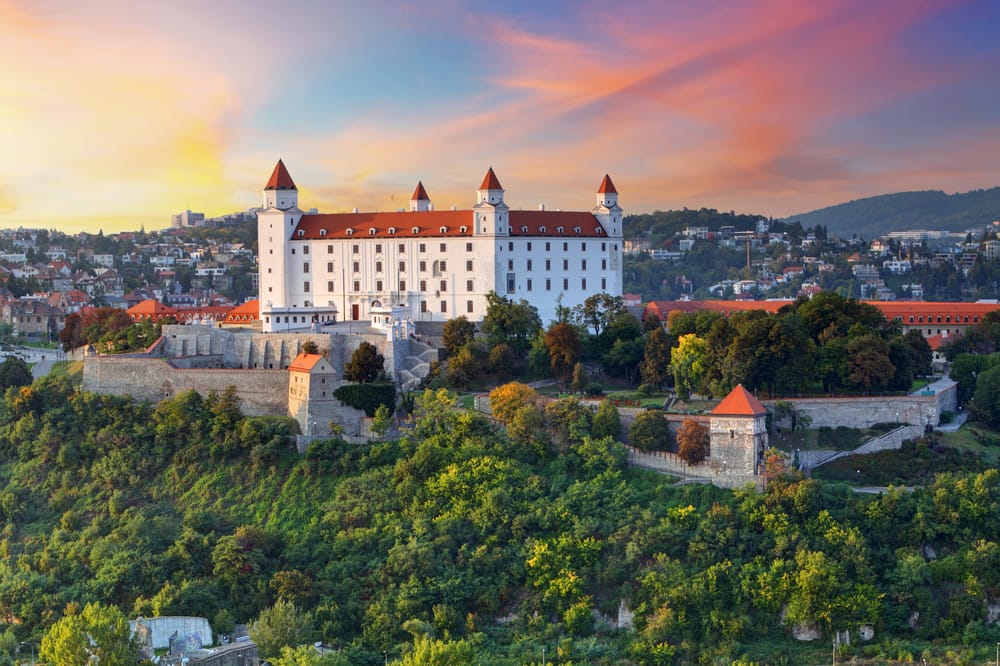
You get a capital city where you can walk from your flat to the old town in fifteen minutes, mountains with genuine alpine peaks two hours away, a wine region on the city's doorstep, and prices that let you say yes to loads of amazing things. Vienna is sixty kilometres from Bratislava. Sixty. You can go for dinner and be home the same night.
Slovakia is the one people discover late and then get faintly evangelical about. This guide is us trying to get you there early on the right type of visa so you can experience Europe the right way!
What This Visa Actually Is
Slovakia issues a national visa for a working holiday, valid for up to twelve months, to citizens of a handful of countries holding bilateral agreements with the Slovak Republic.
The framing across those agreements is consistent: you're there primarily to holiday, travel and experience the place, with work permitted on an occasional or temporary basis to help fund it. It's a one-time thing, and the purpose of your stay isn't supposed to change once you're in.
Slovakia Working Holiday Visa at a Glance
- Who: citizens of Australia, Canada, Japan, New Zealand and Taiwan
- Age: 18 to 30 for Australians. 18 to 35 for New Zealanders, Canadians and Taiwanese, all inclusive at the date of application
- Duration: up to 12 months, multiple entry
- Fee: varies by nationality. Canadians pay nothing. Taiwanese applicants pay EUR 50
- Insurance: comprehensive medical cover for the full period of stay
- Funds: sufficient resources for your stay, plus a return ticket or the money to buy one
- Apply: in person, by appointment, at a Slovak embassy or consulate
- Repeat visits: once only

Who Qualifies, and What You'll Need
Five countries hold agreements, each negotiated separately, so the terms genuinely differ.
What everyone needs:
- A valid passport: how much validity depends on your nationality, covered below
- Sufficient funds: enough to support yourself during the stay. Slovakia doesn't publish one universal figure, so your embassy sets the standard and will want recent bank statements
- A return ticket, or the funds to buy one
- Comprehensive medical insurance: covering the entire period of your stay
- No accompanying dependants: you can't bring children or family with you on this
- First-time applicants only: previous participants can't reapply
Where your passport changes things:
- Australians: 18 to 30 inclusive at the date of application, the tightest window of the five. Your passport must stay valid beyond the expected duration of the stay
- New Zealanders: 18 to 35 inclusive, with the same passport validity rule. That extra five years over Australians is one of the quieter perks in European youth mobility
- Canadians: 18 to 35 inclusive, and the visa is granted free of charge under the youth mobility agreement. Your passport needs validity exceeding the stay by at least three months, you must be living in Canada when you apply, and the application has to be submitted in person
- Taiwanese applicants: 18 to 35, with a cap of 100 participants a year. The fee is EUR 50, paid in cash in Taiwanese dollars at the current rate, and your passport must be valid for more than eighteen months beyond the date the visa is issued
- Japanese applicants: a separate agreement applies, so confirm the current terms with the Slovak consulate or embassy handling your application
British, Irish, American and EU passport holders have no working holiday route into Slovakia, though EU citizens don't need one.
How to Apply
- Contact your nearest Slovak embassy or consulate. Requirements shift slightly between consulates, and appointments are the bottleneck, so start here rather than assembling documents blind
- Book an appointment. Applications must be submitted in person for most nationalities, and you need to arrange this well ahead
- Assemble the file. Completed and signed application form, passport, recent passport photograph to Slovak specifications, bank statements covering the last three months, proof of medical insurance, and your return ticket or evidence you can buy one
- Ask what else your consulate or embassy requires. Some posts request additional supporting material such as a criminal record check or medical certificate. This varies, so ask rather than assume
- Pay the fee, where one applies. Canadians pay nothing. Taiwanese applicants pay EUR 50. Confirm your amount with your mission, and note that fees are generally not refunded if the application is refused
- Register on arrival. You must report your presence to the Foreign Police within three business days of arriving, bringing your passport, visa documentation and proof of accommodation
Nobody at the embassy will help you complete the forms, so have somebody else check the whole file before your appointment. A missing document costs you the appointment slot, not just the paperwork.
Work Life
Work is permitted on a temporary or occasional basis, which suits the way most people actually use the year: a few months of something, then a stretch of travel, then something else.
- Tourism and hospitality: hotels, restaurants and tour operators in Bratislava, the spa towns and the High Tatras take on English speakers, particularly across the summer and ski seasons
- English tutoring: language schools and private tutoring are steady sources of work, with TEFL or TESOL preferred by schools though conversation-based sessions are often open to native speakers without it
- Tech: Bratislava and Košice both have growing sectors taking on contract and project work in development, design and digital marketing
- Wine harvest: the Small Carpathian region just north of Bratislava runs a genuine harvest season, and it's one of the more enjoyable ways to spend an autumn
- Film production: international productions shoot in Slovakia and pick up extras and production assistants locally
Learn to say hello, please and thank you in Slovak (a few cute manners will get you a long way). English is common among younger people in the cities, less so elsewhere, and the effort lands well either way.

The Reality and Your First Week
Slovakia is affordable by Western European standards, not by Central European ones. Bratislava is noticeably more expensive than Košice or anywhere further east, and its rental market is tight because it's a small capital with a lot of demand. Expect to share.
The job market outside Bratislava and Košice thins out fast if you don't speak Slovak. Tourism roles in the Tatras are seasonal in the strictest sense, meaning genuinely nothing between seasons, so time your arrival to either the summer hiking window or the winter ski one rather than the gaps between.
Your first week is the Foreign Police within three business days, then a bank account at one of the major Slovak banks, then a transport pass, which is dramatically cheaper than paying per journey. The three-day registration deadline counts business days and is the one with actual consequences.
Plenty of people put this together themselves and it works fine. It's simply slower than it looks on paper.
Where to Actually Go: Your Slovakia Hit List
Bratislava
Small enough to learn in a fortnight, which is its whole charm. The Staré Mesto old town is compact, walkable and genuinely pretty, though the interesting stuff sits just outside it. Cvernovka, a former thread factory turned creative campus, is where the studios, events and independent scene have landed. Obchodná street is the scruffy, cheap, student-facing spine of the city.
- Drinks: Nu Spirit Bar for jazz, funk and late nights in a basement, KC Dunaj for a culture centre with a rooftop and a crowd that's there for the programming as much as the beer, and Urban House for the coffee-by-day, wine-by-night crossover
- The local ritual: a spritz or a beer along the Danube in summer, with Austria visible on the far bank
- Day trip that isn't a day trip: the Small Carpathian wine route starts about half an hour out. Modra and Pezinok are the names to know, and the harvest festivals in September are the real thing
Košice
The eastern capital, and the one most visitors never reach. Hlavná, the main street, is one of the longest pedestrian promenades in Central Europe with a gothic cathedral parked in the middle of it. Rents are meaningfully lower than Bratislava and the creative scene punches well above the city's size.
Tabačka Kulturfabrik, an old tobacco factory reborn as a cultural centre, is the heart of it: concerts, film, exhibitions, a bar, all in one building. Kasárne Kulturpark, a converted military barracks, does the same job on a larger scale. Between them they carry the city.
Banská Štiavnica
A UNESCO-listed former silver mining town wedged into the crater of an extinct volcano, which is a sentence that should not be accurate but is. Baroque houses stacked up steep streets, artificial lakes built by medieval miners that people now swim in, and an arts and festival scene that has quietly turned it into the country's bohemian weekend destination. Two hundred kilometres from Bratislava and worth every one of them.
The Outdoors
The High Tatras are the headline: more than twenty-five peaks above 2,500 metres, packed into a range you can cross in a day. Štrbské Pleso, the glacial lake resort, is the base for hiking in summer and skiing in winter.
Slovenský raj, Slovak Paradise, is the one to save for a clear weekend. You climb gorges on ladders and steel bridges bolted into rock faces, with waterfalls running underneath you. It's hiking with an obstacle course attached and it's ludicrously good.
Where to Go on a Long Weekend
This is Slovakia's actual superpower, and it deserves its own section. Bratislava sits within reach of four capitals, and the trains are cheap and frequent.
- Vienna: sixty kilometres. An hour on the train, or a boat down the Danube if you're feeling theatrical. Close enough to go for a gallery and be home for dinner
- Budapest: around two and a half hours. Thermal baths, ruin bars, and a completely different energy to anything in Slovakia
- Prague: roughly four hours by train, which makes it a proper weekend rather than a day out
- Kraków: north through the Tatras, and the drive itself is half the reason to go
If you get a longer stretch free, Art History in Florence runs from two weeks and turns a break into something you'll actually carry home.
Before You Book Anything
We don’t run direct trips to Slovakia, but the process is relatively clean cut, you just need to get your ducks in a row. One of the main things we recommend to ensure it’s all smooth sailing is to plan early. Give yourself a minimum of 6 months before expected travel date, that way you’re well and truly ahead of the game and any delays won’t cause the 2am cortisol spikes.
Insurance is worth getting right, since comprehensive cover for the full stay is a condition of the visa. Global Travel Cover is built for this: $0 deductible, buy and renew from anywhere, snow sports covered as standard, which matters if the Tatras are in your plans, and a 24/7 emergency line.
And if you decide you'd rather arrive somewhere with the job matching, housing and arrival support already moving, Global Work & Travel runs working holidays across a range of destinations. Those trips cost more than doing it independently. What you get for the difference is a first month that doesn't eat your savings or your nerve.
Final Thoughts
There's a particular pleasure in getting somewhere before everyone else does, and Slovakia is currently offering it. The Tatras are not crowded. Banská Štiavnica has not been discovered. Košice has a creative scene that would be written about endlessly if it were four hours west.
That won't hold forever. It never does.
So go while the going is cheap, learn to say ďakujem properly, take the train to Vienna on a Wednesday because you can, and come home as the person who is unbearable about a country nobody else in the room has been to.
Honestly? Great personality trait. Recommend it.
We also publish extensive working holiday visa guides for United States, Canada, Australia, United Kingdom, Germany, France, Spain, Italy, Ireland, Norway, Korea, Argentina, Chile, Hong Kong, Estonia, Netherlands, Austria, Slovakia, Portugal, Peru, Greece, Singapore, Malaysia, Taiwan, Mongolia, Indonesia, Vietnam, Thailand, New Zealand, Chile, Ecuador, Brazil, Israel, Czech
Republic, Mongolia, Papua New Guinea, and more coming.

Jessie Chambers
Jessie is a globetrotter and storyteller behind the Global Work & Travel blog, sharing tips, tales, and insights from cities to remote escapes, informed by the collective experience and real-world knowledge of teams across our business.