



Netherlands Working Holiday Visa - A Complete Guide For 2026
by Jessie Chambers a year ago
9 MIN READ
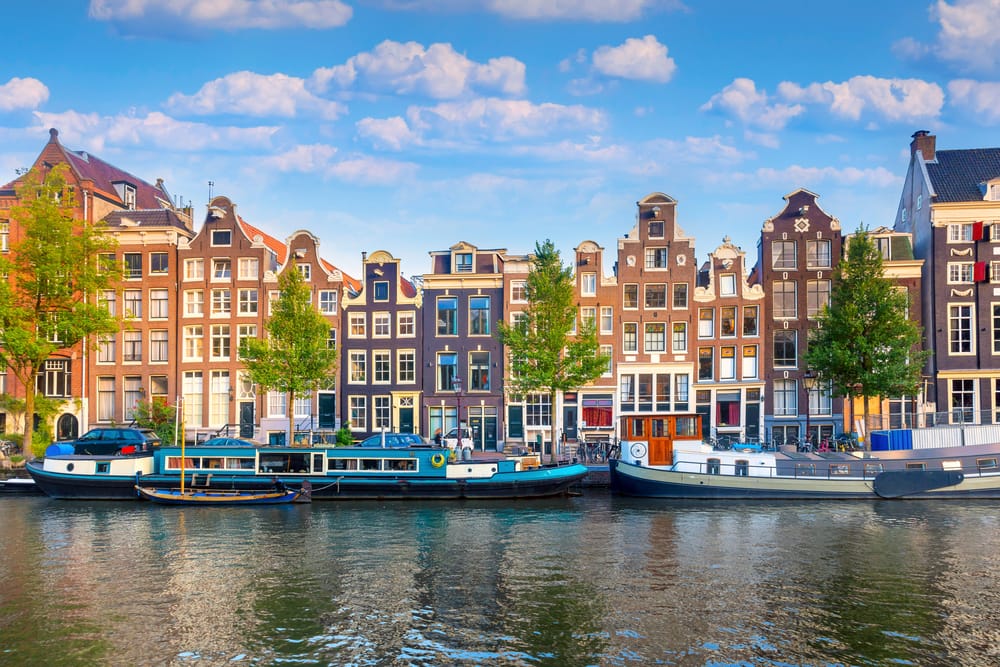
It's a Friday in the Netherlands. You finish work, unlock a slightly battered second-hand bike, and join a river of other cyclists gliding past canals that have looked exactly this good for four hundred years. You meet friends at a brown cafe with the windows flung open, someone orders bitterballen for the table, and the light does that long golden European-summer thing until almost 10pm.
That's a regular evening here. Not a holiday, not a highlight reel, just ordinary Friday energy. The Dutch have quietly figured out a version of daily life that's equal parts practical and joyful, and the wild part is that you get to borrow it for a whole year.
Genuinely, how is an entire country this well-adjusted, cycling everywhere, switching to flawless English mid-sentence, always somehow off to something fun. Some places you visit. The Netherlands you just slot into, like you've been riding these canals your whole life.
What a Working Holiday Visa Actually Is
Now the practical part. A working holiday visa lets young travellers live in a country for up to a year and pick up work along the way to fund the trip, with cultural exchange as the whole point rather than building a career abroad. The Netherlands runs exactly this kind of arrangement, officially a residence permit known as the Working Holiday Scheme, or WHS (some nationalities apply under the closely related WHP).
Here's the catch to know before you fall for it: the Dutch version is open to just nine nationalities, the countries the Netherlands holds a reciprocal agreement with. If your passport is on the list, this guide is your roadmap from eligibility to landing. If it isn't, the Netherlands stays firmly on the someday list, at least through this particular route.
The Netherlands Working Holiday Visa at a Glance
- Who it's for: young travellers from Argentina, Australia, Canada, Hong Kong, Japan, New Zealand, South Korea, Taiwan, or Uruguay
- Age: 18 to 30 at the time you apply
- Duration: up to 12 months, and it cannot be extended
- Once only: you can't have held a previous exchange permit in the Netherlands
- Work: occasional work allowed to fund your stay, with limits (more on those below)
- Funds: proof of enough money for your stay, plus a return ticket or the means to buy one
- Insurance: healthcare cover valid in the Netherlands is mandatory
- Quota: some nationalities have annual caps, so apply early
- Where to apply: directly with the Dutch immigration service, or via a consulate, depending on your nationality
Why the Netherlands is worth it
Plenty of countries are beautiful. The Netherlands is beautiful and it works, which turns out to be a much rarer combination than anyone admits. The trains run on time. The bike lanes are genuinely safer than the roads. You can cross most of the country in the time it takes to watch a film. It's the kind of place that quietly lowers your blood pressure.
And it punches so far above its size. For somewhere you can cycle across in a long weekend, the Netherlands packs in world-class museums, a food scene that goes well beyond cheese (though, the cheese), nightlife that runs till sunrise, and more festivals than there are weekends to attend them. We would genuinely reorganise a whole year around tulip season, and we stand by that.
Then there's the location flex. You're a short hop from Paris, Berlin, Brussels, London. A spontaneous weekend in another country is just a Thursday-night train ticket away. The Netherlands isn't only a place to live. It's a base camp for the whole continent.
Who can actually apply
This is where the Dutch working holiday visa is strict, so read it before you get attached. The residence permit is only open to passport holders of nine countries and territories, and for some of them the number of places is capped each year. Here's the full list, sorted by how much breathing room you've got:
- No annual cap: Australia, Canada, New Zealand. Apply whenever you're ready.
- Up to 100 places a year: Argentina, Hong Kong, Taiwan, Uruguay.
- Up to 200 places a year: Japan, South Korea.
If your nationality isn't on that list, you can't apply through this route, and there's no workaround. And if you're from a capped country, those places can run out months before the year is up, so treat early in the year as your window, not a nice-to-have.
Two more conditions apply to everyone: you need to be at least 18 and no older than 30 when you apply, and you must not have previously held an exchange-purpose residence permit in the Netherlands. It's a once-in-a-lifetime visa, so the year has to count.
The visa requirements in detail
Clear the nationality and age hurdles and the rest of the requirements are refreshingly logical. Here's the full set:
- Cultural-exchange purpose: officially, you're here to experience Dutch society and culture.
- Funds: you'll need to show you can support yourself, and you can't draw on Dutch public benefits during your stay.
- Return ticket: either hold one, or prove you have the money to buy one.
- Insurance: healthcare cover valid in the Netherlands is mandatory for the whole stay, and it's checked.
- No dependents: you can't bring family members along on this permit.
- Live in your home country when you apply: you generally need to be in your country of nationality at the point of application.
The work rules deserve their own moment, because they catch people out. Your permit allows occasional work to support your stay, and crucially, your employer does not need a separate work permit for you. You can work full-time in stretches, but you cannot work the entire year for the same employer, and you cannot work as self-employed or freelance. The logic is consistent: this is a cultural-exchange visa with work attached, not a back-door work visa.
The permit lasts a maximum of 12 months and cannot be extended. When it's done, it's done, though you can switch to a different Dutch permit if you want to stay on for study or qualifying work.
How to apply for the Netherlands working holiday visa
The application route depends entirely on your nationality, so find your lane first. There are broadly two paths.
If you're from Australia, Canada, New Zealand, Japan, or South Korea, you've got the simpler run. You can apply online directly with the Dutch immigration service, and you don't need an entry visa (the MVV) first. The steps look like this:
- Check you meet every requirement, and that any quota for your nationality is still open.
- Apply online with the immigration service, no earlier than 90 days before you travel.
- Provide your biometrics at an appointment shortly after applying.
- Wait for the decision, usually within 90 days, though straightforward cases often move faster.
- Collect your residence permit once you're approved.
Because these nationalities are visa-exempt for entry to the Netherlands, some applicants choose to travel over first and apply from there, but lodging the application before you go keeps the timeline cleaner and your start date more predictable.
If you're from Argentina, Hong Kong, Taiwan, or Uruguay, the route is longer and runs partly through a Dutch embassy or consulate. You'll use a written application form, apply for the entry visa (MVV) and residence permit together, and submit through the right post for your nationality. Argentina applies via the embassy in Buenos Aires, Hong Kong passport holders apply in person at the Consulate-General, and Taiwan applies through the Netherlands Office Taipei, which opens its registration in a set window each March. Build in extra weeks for this path.
Whichever route you're on, the same things happen once you land: you register with your local municipality, you're issued a citizen service number (the BSN) that you'll need for working, banking, and healthcare, and you collect your residence permit card.
None of this needs a middleman. Plenty of people handle the whole application solo, and it works. It's just heavy on forms, timing rules, and nationality.
Keep in mind: the details here were accurate at the time of writing, but quotas, fees and application steps can change without much warning. Always confirm the current requirements through the official channels before you apply.
The Costs
Budgeting for a Dutch working holiday comes down to a few buckets:
- The IND application fee: the immigration service charges a fee for the residence permit, re-set every 1 January. Check the current amount on the IND's own fees page before you apply, as it shifts each year.
- Proof of funds: not a fee, but you'll need a real savings buffer to show you can support yourself from day one.
- Insurance: a healthcare policy valid in the Netherlands, mandatory for the full stay.
- The early weeks: flights, your first rent and deposit, and spending money before any work income lands.
The Netherlands isn't a budget destination, and the upfront costs are front-loaded, so arrive with more of a cushion than you think you'll need.
Work and Everyday Life
On this visa, work is there to keep you afloat while you actually live in the country, and the easiest roles to land reflect that:
- Hospitality: bars, cafes, and restaurants in the bigger cities, where English-speaking staff are genuinely in demand.
- Tourism and seasonal work: busy from roughly spring through summer, with plenty of guest-facing roles.
- Retail and events: flexible, casual, and easy to pick up once you've got your BSN and a bank account sorted.
- Gig and delivery work: short-term and flexible, which suits a year spent moving around.
Two things make daily life unusually smooth here. English is spoken almost everywhere, to a genuinely high level, so you can build a working and social life without fluent Dutch (locals appreciate the effort, though, and a few phrases go a long way). And the country is so compact and well-connected that wherever you base yourself, the rest of it is an easy train ride away.
One practical note for your first fortnight: the admin runs in a sequence, and it pays to know the order. You register with your local municipality, that registration gives you a BSN, the BSN lets you open a Dutch bank account and set up a DigiD login (the key to almost every official service in the country), and that whole combination is what actually unlocks paid work and a phone contract. Knock those over in your first week or two and the rest of the year gets noticeably easier.
The Reality Check
Two things make this visa harder than the daydream admits: getting one of the nine passports that qualify, and beating the quota if yours is capped. Even once you're approved, the Netherlands runs into one very real wall, which is housing. Finding an affordable room, especially in Amsterdam, Utrecht, or Rotterdam, is the single biggest challenge most arrivals face, and scams targeting newcomers are common, so never pay a deposit for a place you haven't seen. The work is incidental by design, so don't arrive expecting to save a fortune. And because the permit is once-only and can't be extended, the clock is real from day one. Sort your funds, your insurance, and a plan for those first few weeks of accommodation before you fly, because that early stretch is where the stress actually lives.
Places You Need to See
Amsterdam
Yes, it's the obvious one, and yes, it earns it. Beyond the canal-postcard stuff there's a genuinely brilliant city: world-class museums, tiny bars older than some countries, neighbourhoods like the Jordaan and De Pijp that feel like villages with better coffee. Just do yourself a favour and live a little outside the centre. Your rent, and your sanity, will thank you.
Rotterdam
Amsterdam's bold, modern, slightly chaotic younger sibling. Rebuilt from the ground up after the war with zero interest in looking like anywhere else, it's all daring architecture, a properly multicultural food scene, and the best nightlife in the country. Anyone still calling Rotterdam the ugly one hasn't actually been, and we'll happily argue about it.
Utrecht
Honestly, the one we'd quietly tell a friend to base themselves in. All the canal charm of Amsterdam at a fraction of the chaos, split-level wharves turned into waterside cafes, huge student energy, and a cathedral tower worth every one of the stairs to the top. Utrecht is the move, and now you're in on it.
Getting Your Insurance Sorted
This isn't the section to skim. Healthcare cover valid in the Netherlands is a hard requirement of the visa, checked at application, so you cannot land without it. Sorting a policy you trust before you fly is part of the entry ticket, not an afterthought.
Global Travel Cover, the insurance brand in the Global Work & Travel family, is an easy fit here. It runs on a $0 deductible, you can buy and renew it from anywhere rather than only before you leave home, snow sports are included as standard, and there's a 24/7 emergency line for the moments that don't wait for office hours. Comprehensive cover costs more than a bare-bones policy, but with a Schengen base and weekend trips across Europe all but inevitable, having insurance that crosses borders with you is the kind of thing you only appreciate when you suddenly need it.
Final Thoughts
The Netherlands has a way of making a big international move feel weirdly doable. It's organised, it's welcoming, half the country speaks your language, and within a few weeks you'll be cycling home from work like you were born doing it, mildly smug and fully converted.
If you're one of the nine nationalities who can make their way over, the only thing standing between you and a year of canal-side evenings and spontaneous weekends in three other countries is the decision to start the paperwork. The window is real, the quota clock is ticking for some of you, and future-you is already a little annoyed you're still reading instead of applying.
We also publish extensive working holiday visa guides for United States, Canada, Australia, United Kingdom, Germany, France, Spain, Italy, Ireland, Norway, Korea, Argentina, Chile, Hong Kong, Estonia, Netherlands, Austria, Slovakia, Portugal, Peru, Greece, Singapore, Malaysia, Taiwan, Mongolia, Indonesia, Vietnam, Thailand, New Zealand, Chile, Ecuador, Brazil, Israel, Czech
Republic, Mongolia, Papua New Guinea, and more coming.

Jessie Chambers
Jessie is a globetrotter and storyteller behind the Global Work & Travel blog, sharing tips, tales, and insights from cities to remote escapes, informed by the collective experience and real-world knowledge of teams across our business.