



Indonesia's Working Holiday Visa - A Complete Guide For 2026
by Jessie Chambers a year ago
10 MIN READ
This guide was updated on 10th of August 2026.
POV: it's 6am, you're halfway up a volcano in the dark, and a stranger from your group is handing you a coffee that tastes better than anything you've made at home. By the time the sun cracks over the ridge, you've stopped checking your phone entirely.
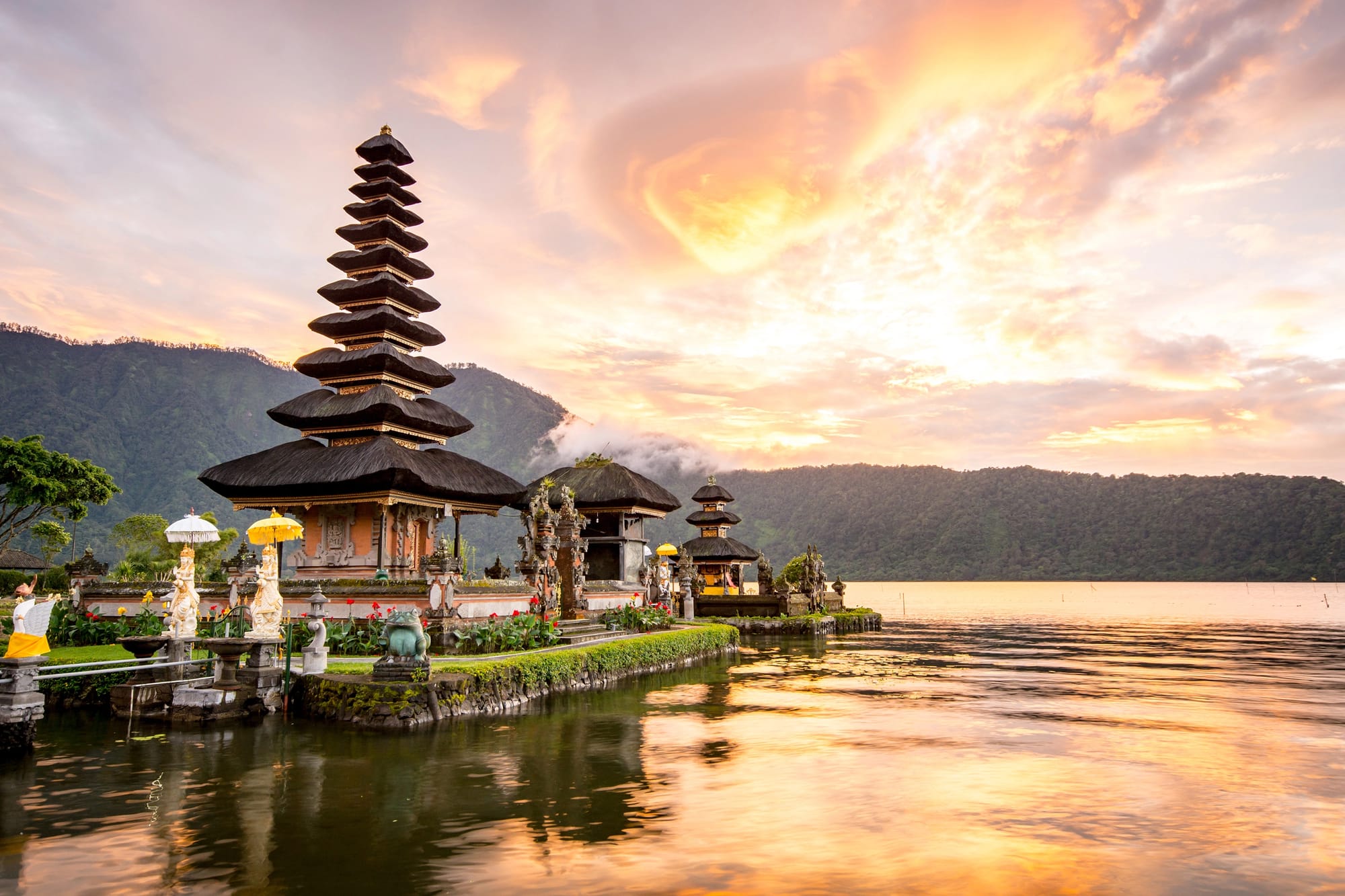
That's Indonesia doing its thing. Seventeen thousand islands, a different world on each one, and a way of slowing your whole nervous system down that you didn't know you needed. Mornings smell like kopi and incense. Afternoons are rice terraces so green they look edited. Evenings are plastic warung chairs, a plate of nasi goreng for the price of a flat white back home, and a sky going pink over the water.
And the beaches. We have to talk about the beaches. Canggu for the surf and the smoothie bowls, Uluwatu for the cliffs, the Gili Islands for water so clear you can count the turtles. You don't visit Bali. Bali rearranges you a little.
This guide is the honest version: what the Indonesia working holiday visa actually is, who can really use it, and how to do the trip properly without learning anything the hard way at an immigration desk.
What the Indonesia Working Holiday Visa Actually Is
Here's the thing almost every other guide gets muddled, and it's worth getting straight before you book a single flight.
Search "Indonesia working holiday visa" and you'll find the same eligibility list over and over: aged 18 to 30, a tertiary qualification or two years of university, a language test, around AUD 5,000 in funds, a government support letter. Those rules are real. Most guides just describe one side of what is actually a two-way street.
The arrangement is reciprocal. Under the Australia and Indonesia agreement, each country issues its own working holiday visa to the other's young citizens. Indonesians travel to Australia on the Work and Holiday visa (subclass 462), and Australians travel to Indonesia on Indonesia's own Work and Holiday visa, known locally as the Visa Bekerja dan Berlibur.
So the honest headline: if you hold an Australian passport, there's a genuine working holiday visa that lets you live and work in Indonesia for up to a year. If you hold any other passport, Indonesia doesn't currently offer you a working holiday visa, and your route in looks different. We'll cover both.
Indonesia Working Holiday Visa at a Glance
- What it is: a reciprocal Work and Holiday arrangement between Australia and Indonesia, where each country issues its own visa to the other's young citizens.
- Who can use it to enter Indonesia: Australian passport holders aged 18 to 30. Australians are currently the only foreign nationals who can hold this Indonesian visa.
- Key requirements: tertiary qualifications or at least two years of university study, functional Indonesian language skills, around AUD 5,000 in funds, and a letter of support from the Australian Government.
- Length of stay: up to 12 months.
- Work rights: yes, temporary and casual work, capped at six months with any one employer. English teaching isn't permitted on this visa.
- Intake: places are capped and reviewed each year, so apply early once the year's intake opens.
- Where to apply: the Indonesian Embassy in Canberra, or an Indonesian Consulate in Sydney, Melbourne or Perth.
- Everyone else: if you're not Australian, you'll enter Indonesia on a tourist route, or a work or remote-worker visa instead. The sections below break these down.
Why Indonesia Hits Different
Set the visa aside for a second, because here's why people lose their minds over this country in the first place.
Indonesia is not a destination, it's a region pretending to be one country. One week you're on a surfboard in Bali, the next you're watching Komodo dragons stroll past like they own the place, which, fair, they do. Flights between islands are short and cheap, so "where to this weekend" becomes an impossibly hard question in the best possible way.
Then there's the food. Nasi goreng at midnight, satay smoking on a roadside grill, a whole fish straight off a Gili Island boat, fresh coconut handed to you for less than a bottle of water costs at home. Your group chat is about to get very tired of your food photos. Sorry in advance.
And the people. Indonesians are warm in a way that catches you off guard, the kind of welcome that turns a homestay breakfast into a two-hour conversation. You arrive for the beaches. You stay for the feeling that you've slipped into a slower, kinder version of your own life. It’s liberating as it has “looser” rules compared to most western countries, and a lot of foreigners flock here to live the true essence of “island life”.
Here's the quiet superpower, though: your money goes further here than almost anywhere else you'd want to be. A proper meal for a couple of dollars, a scooter for the day for less than a coffee back home, a beachfront room that would cost a fortune in Europe. That gap is what turns a two-week holiday into a six-week one, and a "maybe next year" into a "we're booking it tonight." It's why people who come for a quick island fix end up rearranging their whole calendar around going back.
The Visa, Explained Simply
So how do you actually get into Indonesia, and what can you do once you're there? It comes down to your passport and your plan.
If you're Australian and you want to work, the Work and Holiday visa is your route: up to 12 months, with the right to take temporary and casual jobs (English teaching aside). You apply through an Indonesian mission in Australia before you go, not on arrival.
For everyone else, and for Australians who only want to travel, most people enter on visa-free entry or a visa on arrival. Both are for tourism and leisure only. The visa on arrival can be extended once at a local immigration office; visa-free entry can't be extended at all. For a longer stretch, a pre-approved visit visa lets you stay longer and extend a few times. None of these three let you work.
That's the one line worth keeping front of mind: a tourist entry does not give you the right to earn money in Indonesia, and that includes the grey-area stuff. Paid work, client work, even barter arrangements like a free villa in exchange for content are all treated as work under Indonesian law. Through 2026, immigration has been actively enforcing this in Bali, with a dedicated task force, digital monitoring, and real consequences for getting it wrong.
To work legally and draw a local salary without the working holiday visa, you need an employer to sponsor a work permit and limited stay permit (the KITAS), arranged before you start. If you work remotely for a company based outside Indonesia, there's a separate remote worker visa built for exactly that.
Visa Routes at a Glance
- Work and Holiday visa (for Australians): Indonesia's own working holiday visa for Australian passport holders aged 18 to 30. Up to 12 months, with the right to work in temporary and casual roles, applied for through an Indonesian mission in Australia. This is the inbound working holiday route, and right now it's Australians only.
- Visa-free entry: tourism only, short stay, cannot be extended. Fine for a holiday, not for work.
- Visa on arrival: tourism only, extendable once at a local immigration office. Still no work rights.
- Visit visa (pre-approved): longer stays with a few extensions, suited to slow travel. Not a work permit.
- Work permit and KITAS: the route to a local salary for non-Australians, and for Australians not using the working holiday visa, sponsored by an Indonesian employer and arranged from outside the country.
- Remote worker visa: for people earning from companies based outside Indonesia, subject to income requirements.
If You Actually Want to Work in Indonesia
Say you're set on more than a holiday. What's the honest route? It comes down to your passport.
If you're Australian, start with the Work and Holiday visa above. It's the most flexible legal way to actually earn while you're there, it doesn't tie you to a single employer, and it's built for exactly this. Just mind the guardrails: temporary and casual roles, up to six months per employer, and no English teaching.
If you're not Australian, or you want to work beyond the 12 months the working holiday visa allows, the legitimate path runs through a local employer who sponsors your work permit. The sectors that realistically hire and sponsor foreigners include hospitality at the higher end, international schools, and roles where a company genuinely needs a skill the local market is short on. Teaching English exists as a path too, usually through language schools and international schools that handle the sponsorship, though demand and pay vary a lot by city.
The other modern route is bringing your own income with you. Indonesia's remote worker visa was built for people employed by overseas companies who want to be based somewhere like Bali legally, and it's the cleanest way to live the cafe-and-coworking version of the dream without the immigration risk.
What doesn't work is arriving on a tourist stamp and picking up cash jobs once you land. It used to be common. It's now a fast track to a fine, a flight home, and a re-entry ban.

How to Actually Do Indonesia With Us
Here's the part where Indonesia gets easy. You can absolutely plan a trip here solo, and plenty of people do. It works. It's also a lot of logistics, a lot of group-chat herding, and a lot of figuring out island transport on the fly.
The alternative is letting Global Work & Travel sort the route, the group, and the on-the-ground logistics, so you arrive with the setup already in motion and the messy parts taken off your plate. A group leader meets you at the airport, you've got an instant crew from day one, and help with onward travel is built in. These trips aren't the cheapest way to see Bali, but they trade a bit more upfront for speed, a ready-made group, and none of the solo-planning headache.
- Bali Experience: the all-rounder. Temples, waterfalls, a sunrise volcano, rice fields, a surf lesson on a world-famous break, and island time out on the Gilis, across Bali and the islands. The greatest-hits intro if it's your first time and you want the lot.
- Bali Intro: the classic backpacker run. Crazy Bali nightlife, ancient temples, the Ubud Monkey Forest, dolphin spotting off Lovina, and a Gili snorkel session, with onward-travel help baked in. There's a longer 12-day version if you want to stretch it out.
- Bali Experience (12 Day): the premium, longer cut. Upgraded stays, wild dolphins, sea-turtle snorkels, a volcano sunrise, a traditional massage, and more room to actually breathe between the highlights. Best of Bali, in style.
- Bali & Beyond: the big adventure. Everything you love about Bali, then east to Lombok's villages and waterfalls before a multi-day live-aboard boat out to the Komodo dragons. The famous bits and the far-flung bits in one go.
- Komodo Island Hopper: the off-the-map one. Nine days from Lombok through Sumbawa and secret-spot Moyo, then a three-day private live-aboard to Manta Point, Pink Beach, the Padar viewpoint, and the dragons themselves. Bucket-list energy, no notes.
Whatever your speed, there's a version of this trip with your name on it: a long weekend's worth of greatest hits, or a full off-the-grid odyssey out to the dragons. Pick the one that matches the time you've actually got.
Places You Need to See
Ubud
Bali's green, humming heart, an hour inland and a world away from the beach clubs. Rice terraces that stair-step down whole valleys, a monkey forest full of pickpocket primates who will absolutely take your sunglasses, and yoga-and-smoothie energy that somehow doesn't read as a parody once you're in it. The way we would move here for the morning light alone.
Canggu
Surf town turned coworking capital, all black-sand breaks, secondhand scooters, and cafes that take their oat milk very seriously. Learn to surf badly, eat extremely well, watch the sunset from the beach with a cold Bintang. It's a vibe and the vibe is correct.
The Gili Islands
Three tiny car-free dots off Lombok where the only traffic is bicycles and the occasional horse cart. Snorkel with turtles in the morning, hammock yourself into a coma by afternoon, happy hour by sunset. It’s quite literally one of those places that will leave a mark on you for life.
Komodo and Lombok
The wilder, less-polished east. Lombok's waterfalls and traditional villages, then boat trips out through the Komodo islands to see the dragons roaming in the actual wild, plus some of the best snorkelling and viewpoints in the whole archipelago.
The Nusa Islands
Just off Bali's coast and somehow a completely different planet. Nusa Penida for the cliff that everyone's seen on their feed and nobody can pronounce, Nusa Lembongan for manta rays and mangrove paddles, Nusa Ceningan for the yellow bridge between them. A day trip on paper, a "why did we book the ferry home" situation in practice.
Yogyakarta
For the culture deep-dive. The soul of Javanese tradition, batik and gamelan and ancient temples close by, reachable on a cheap domestic flight when you want a few days that aren't about the beach.
Sorting Your Cover
One practical thing the trips don't include, on purpose: flights and travel insurance. With so many nationalities, durations, and routes, those get tailored to you rather than bundled at a fixed price, and your Travel Concierge helps you arrange both once you're booked.
For the insurance side, Global Travel Cover is the natural fit. It's built for exactly this kind of island-hopping, boat-trip, scooter-everywhere travel: a $0 deductible, snow sports covered as standard if your trip ends up somewhere cold, a 24/7 worldwide emergency line, and the flexibility to buy or renew from anywhere, even after you've already left home. For a trip with this many ferries and moving parts, proper cover behind you is the difference between a bad day and a bad month.

Final Thoughts
Indonesia isn't a place you tick off. It's a place that quietly recalibrates what you want your everyday life to feel like, then sends you home plotting your return before you've even left.
The visa picture is simpler than the internet makes it look: come as a traveller, do it properly, and save the working-abroad dream for the destinations actually built for it. The trip itself? That part can be the easy yes. Sort the cover, pick your route through Indonesia, and let the rest be rice fields, boat decks, and that 6am volcano coffee. Whether you've got nine days or the whole dry season, there's a version of this waiting for you, group sorted, route mapped, dragons optional but highly recommended.
Some places you describe. Indonesia you have to go and feel.
If you want to learn about the digital nomad visa's for other countries, we have extensive guides for countries like the United Kingdom, Germany, New Zealand, Italy, Portugal, Spain, Thailand, and Japan.
We also publish extensive working holiday visa guides for United States, Canada, Australia, United Kingdom, Germany, France, Spain, Italy, Ireland, Norway, Korea, Argentina, Chile, Hong Kong, Estonia, Netherlands, Austria, Slovakia, Portugal, Peru, Greece, Singapore, Malaysia, Taiwan, Mongolia, Indonesia, Vietnam, Thailand, New Zealand, Chile, Ecuador, Brazil, Israel, Czech
Republic, Mongolia, Papua New Guinea, and more coming.

Jessie Chambers
Jessie is a globetrotter and storyteller behind the Global Work & Travel blog, sharing tips, tales, and insights from cities to remote escapes, informed by the collective experience and real-world knowledge of teams across our business.