



Czech Republic Working Holiday Visa - The Complete Guide For 2027
by Jessie Chambers 2 years ago
9 MIN READ
(this guide was updated for accuracy 21st of September 2026)
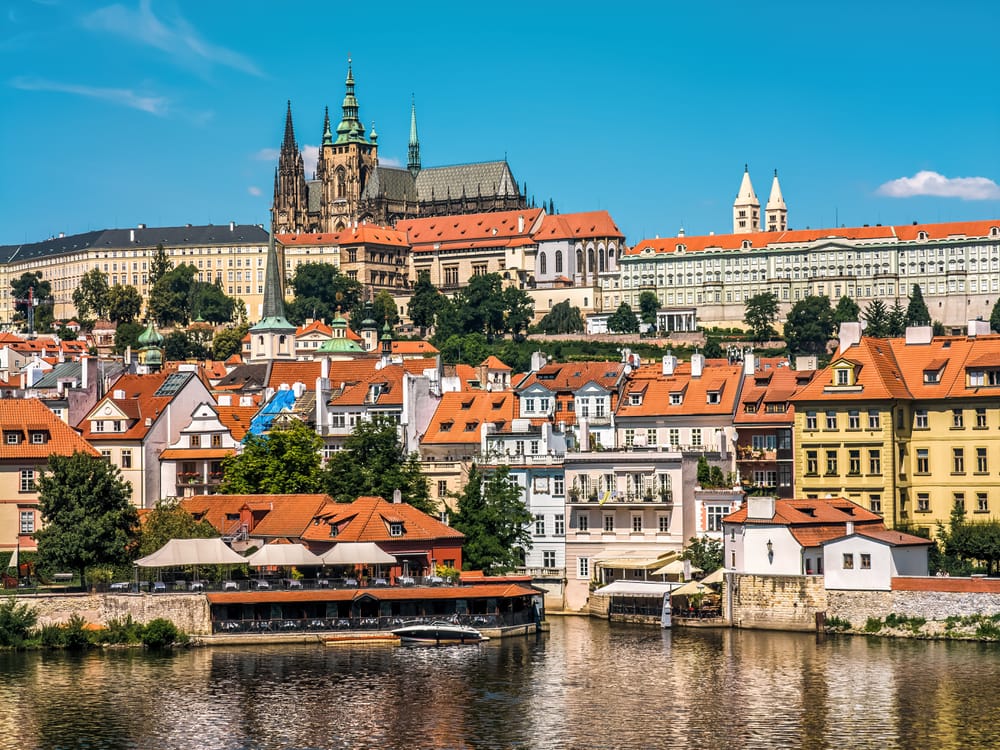
Everyone arrives in Prague for the castle and the bridge and the thing where the clock does its little performance on the hour.
Then about three weeks in, something shifts. You stop going to the Old Town entirely. You find a pub in Žižkov where the beer costs less than a coffee did back home and the waiter brings you another one without asking, because that's the system and you're in it now. You learn that Czechs drink more beer per person than anyone else on the planet and you begin, quietly, to understand why.
That's the trick with Czechia. The postcard version is genuinely lovely and it is also about four percent of what's here. The rest is beer gardens on hillsides, a second city that out-drinks the capital, medieval towns nobody has heard of, and a cost of living that lets you actually live rather than budget.
A working holiday buys you up to twelve months of the four percent and the ninety-six percent both.
What This Visa Actually Is
Czechia issues a long-term visa, valid for stays over 90 days, specifically for a working holiday. It's available only to citizens of countries that hold a bilateral agreement with the Czech Republic, and each of those agreements was negotiated separately, so the rules genuinely differ depending on your passport.
The official position is that you're here to holiday, improve your language skills and get to know the place, with work as a secondary purpose. That's not just diplomatic phrasing. It shapes what you can do, how long you get, and why it's a one-time thing.

Czech Republic Working Holiday Visa at a Glance
- Who: citizens of Australia, Canada, Chile, Israel, Japan, New Zealand, Peru, South Korea and Taiwan.
- Age: 18 to 30 for most, with two exceptions. Australians are 18 to 26. Canadians and New Zealanders are 18 to 35.
- Duration: up to 12 months.
- Fee: 2,500 CZK for most nationalities, 3,000 CZK for Canadians, and free for Japanese citizens under that agreement.
- Insurance: comprehensive medical cover, proven before the visa goes into your passport.
- Funds: proof you can support yourself at the start of your stay, plus a return ticket or the money for one. Some countries specify a minimum period, for instance, Japan requires funds for at least the first month.
- Where to apply: in person, by appointment, at a Czech embassy or consulate
- Repeat visits: once only. Canadians (lucky ducks) can apply under a different category for their second rodeo.
Who Qualifies, and What You'll Need
Nine countries hold agreements. The core requirements look similar across all of them, and then the details fork.
What everyone needs:
- The application form: printed, signed, filled in legibly in block capitals and Latin characters. Sounds petty, gets applications rejected.
- A valid travel document: how much validity you need depends on your nationality, see below.
- Proof of funds: enough to cover the start of your residence. Czechia doesn't publish one universal figure, so your intention (good times and vibes don’t cut it) sets the bar.
- Onward travel: a return ticket, or the funds to buy one.
- A criminal record declaration: for most nationalities this is a signed statement that you have no convictions, not a full police certificate. Check what your mission wants before paying for paperwork you may not need.
- Comprehensive medical insurance: either travel medical cover for your first 90 days plus comprehensive cover for the rest of the stay, or comprehensive cover for the whole thing.
- Photographs: two, to the standard format.
- No dependents: you can't bring children or accompanying family on this visa.
Where your passport changes things:
- Australians: 18 to 26 at application, which is the tightest age window of any working holiday in Europe. Applications go through the Czech mission in Australia
- Canadians and New Zealanders: 18 to 35, the most generous range on the list, but with conditions attached. You need to fall into one of the defined categories, which include having finished post-secondary study and wanting further paid training on the basis of a promised work contract. Canadians also pay the higher 3,000 CZK fee and need to show a promised work contract, proof of enrolment, or confirmation of intent to holiday
- Japanese citizens: the visa is issued free of charge under the terms of that agreement
- Chileans, Peruvians, Israelis, South Koreans and Taiwanese: 18 to 30
- Passport validity: three months beyond your intended stay for Chile, Peru and South Korea. Six months for Israel. For Japan and Canada it simply has to outlast the stay. Confirm yours rather than assuming six months across the board
If you hold a British, Irish, American or European passport, there's no working holiday agreement with Czechia, so this particular route isn't open to you.
How to Apply
No portal, no upload, no tracking app that actually helps. This is an in-person, on-paper process. You need to get face-to-face, and like, actually talk to a real person - we know, otherworldly in this current climate.
- Get in touch. You book an appointment before anything else, usually by email. Which embassy or consulate handles you depends on your nationality, so start from the Czech Ministry of the Interior's information portal rather than guessing.
- Fill in the long-term visa form. You can complete it online and print it, or collect a blank one free from any Czech mission. It must be printed and signed to be accepted.
- Sort your insurance early. You'll need proof of cover, and it gets checked twice: once as part of the application, and again at collection before the visa is physically placed in your passport.
- Submit in person. Missions can waive this in justified cases, but assume you're going in. Staff may take your fingerprints, and an interview is possible.
- Pay the consular fee. 2,500 CZK for most, 3,000 CZK for Canadians, nothing for Japanese applicants.
- Wait for the decision. The Ministry of the Interior assesses formal requirements first, then eligibility. You can add documents during the process, and you can track the status online.
- Collect the visa and show your insurance. The mission contacts you to arrange it. Bring the insurance proof, because you won't get the visa without it.
- Register within three days of arrival. The Foreign Police need to see you within 72 hours of landing. This one has no flexibility in it.
If your application is deemed inadmissible, the whole thing comes back to you, fee included. If it's refused on the merits, there's no appeal, though you can request a fresh assessment of the reasons.
Work Life
The visa allows work, with the caveat that it's meant to be secondary to the holiday. In practice, these are the corners of the working world where you can stuff your pockets with pennies, and in return smack back a few pints of Czech brew!
- Teaching English: language schools, private tutoring and corporate training all take on native speakers, and Prague and Brno both have real demand.
- Hospitality and tourism: the volume of visitors Czechia handles means bars, hostels, restaurants and tour operations hire continuously
- Childcare: English-speaking families look for help partly for the language exposure, and some roles include accommodation
- Tech and startups: Prague's startup scene runs on English for customer support, content and entry-level marketing roles
- Seasonal work: the summer festival circuit and the Christmas market season both absorb short-term staff
Learn the numbers and the word for "please" before you land. Czech is genuinely difficult and nobody expects fluency, but the effort registers.

The Reality and Your First Week
Prague is no longer the bargain it was a decade ago. Rents in the centre have climbed hard, and the flat hunt is competitive enough that most people start in a hostel or a sublet. Brno, Olomouc and Ostrava are a nudge cheaper, and the trade-off is fewer English-speaking jobs.
The three-day Foreign Police registration is the deadline that catches people. Your accommodation may file it for you, so ask on arrival rather than assuming. In the same first week, get a local SIM, open a bank account with your passport, visa and proof of address, and work out the tram system, which is excellent and will make you resent every transport network you've used previously.
You can organise all of this independently and plenty do. It works. It's just slower, and the first month costs more than the spreadsheet said it would.
Where to Actually Go: Your Czechia Hit List
The part worth screenshotting. Where to live, where to drink, and which city everyone underrates - aka, this is all the fun stuff!
Prague
Skip the centre for anything other than work. Žižkov is the one, historically the rough end, now the district with the highest pub density in a country that takes pubs seriously. Vinohrady is leafier, more grown-up, full of good food. Holešovice across the river is the post-industrial one, all galleries and warehouses and the best nightlife.
- Beer gardens, which are the whole point: Riegrovy sady in Vinohrady for the crowd, Letná for the view over the river and the bridges. Both are outdoors, both are cheap, both eat entire summer afternoons
- Coffee worth the detour: Můj šálek kávy in Karlín and EMA espresso bar near the main station, back when you need something other than beer
- Nights out: Cross Club in Holešovice, a labyrinth of welded scrap metal and moving sculpture that also happens to book good electronic acts. Roxy on Dlouhá for the bigger nights. Lucerna Music Bar for the 80s and 90s party, which is deeply uncool and completely undefeated
- Summer evenings: Náplavka, the riverbank below Vyšehrad, where the bars are built into the embankment wall and everyone sits on the concrete with their legs over the water
Brno
Czechia's second city, packed with students, and the local position is that its bar scene beats Prague's. They may be right.
- Bar, který neexistuje: "the bar that doesn't exist", chandeliers and chesterfields, rare spirits and a cocktail list people travel for
- Super Panda Circus: unmarked door, a doorbell, then a circus-themed underground den serving Asian-inspired cocktails from a menu that changes yearly. Ring the bell. Trust the process
- Výčep Na Stojáka: the antidote to both of the above, a stand-up beer place where nobody sits and nobody minds
- Fléda: the club that's been carrying Brno's live music and DJ scene for decades
The Špilberk fortress sits above it all, and Villa Tugendhat is a functionalist landmark you can actually tour.
Olomouc
The one nobody outside Czechia mentions. A university town with a UNESCO-listed plague column, two enormous squares, an astronomical clock the communists redesigned so the saints became factory workers, and a brewery in the middle of it serving its own beer. Rents are a fraction of Prague. The local cheese, tvarůžky, smells genuinely offensive and you should eat it anyway.
We fear Olomouc doesn't get talked about enough, and this is us doing something about it.
Český Krumlov
Not somewhere to live, somewhere to disappear to for a weekend. A river loops almost completely around a medieval town centre, there's a castle with a bear moat that is exactly as odd as it sounds, and in summer you can float through the whole thing on a rented raft. Go off-season if you can. Go anyway if you can't.
Where to Go When You Get a Week Off
Prague is a budget airline hub, which is the quiet superpower of basing yourself here. Half of Europe is a cheap two-hour flight, and the overnight trains south are genuinely pleasant. If you'd rather your week off produced something more than a camera roll:
- Cooking in Florence: two weeks learning to actually cook Italian food properly, which is a skill that outlasts the trip and makes you insufferable at dinner parties for years.
- Day Skipper in Primosten: one week on the Croatian coast working toward a recognised sailing qualification. Landlocked country, meet the Adriatic.
- Coastal Dive Cleanup Croatia: from two to eight weeks, combining marine conservation work with dive certification, for anyone who wants the time to count for something.
Before You Book Anything
Czechia isn't a destination Global Work & Travel currently runs trips to, so this is one you'll put together yourself. The process is manageable, and the errors people make are the ones this guide has already covered.
The insurance is the piece worth getting right, because the visa doesn't get issued without proof of it and it's checked twice. Global Travel Cover suits this well: $0 deductible, buy and renew from anywhere, snow sports included as standard, and a 24/7 emergency line.
If you'd rather arrive somewhere with the job matching, housing and arrival setup already moving, Global Work & Travel runs working holidays across the world.
Final Thoughts
You will become the person who has opinions about beer. It's unavoidable. Somewhere around month two you'll catch yourself explaining the difference between a tank beer and a bottled one to someone who did not ask, and at that point the transformation is complete.
You'll also learn that the good stuff was never in the guidebook. It was the tram at midnight, the beer garden that only makes sense in July, the friend who taught you to order properly, the weekend in a town you'd never heard of before someone at work mentioned it.
Twelve months, one shot, and a country that costs less than you think. You don't have to do all of it. You just have to start.
We also publish extensive working holiday visa guides for United States, Canada, Australia, United Kingdom, Germany, France, Spain, Italy, Ireland, Norway, Korea, Argentina, Chile, Hong Kong, Estonia, Netherlands, Austria, Slovakia, Portugal, Peru, Greece, Singapore, Malaysia, Taiwan, Mongolia, Indonesia, Vietnam, Thailand, New Zealand, Chile, Ecuador, Brazil, Israel, Czech
Republic, Mongolia, Papua New Guinea, and more coming.

Jessie Chambers
Jessie is a globetrotter and storyteller behind the Global Work & Travel blog, sharing tips, tales, and insights from cities to remote escapes, informed by the collective experience and real-world knowledge of teams across our business.