



Austria Working Holiday Visa - A Complete Guide For 2027
by Jessie Chambers 2 years ago
12 MIN READ
(This guide was updated for accuracy on 18th of September 2026)
You think you are going for the mountains. Everyone does. You picture the ski season, the lift pass, the Alps doing their enormous thing along the horizon, and you assume the rest will sort itself out around that.
Then you lose a Tuesday afternoon in a Vienna coffee house. A waiter in a bow tie brings a small glass of water alongside your Melange, declines to rush you for three hours, and looks mildly wounded when you apologise for taking up a table. Somewhere in hour two, book unread, coffee gone cold, the mountains quietly stop being the point.
Austria does this to almost everybody. It sells itself on the skiing and then wins you over with the part nobody put on the poster: the coffee houses, the concert halls, the fact that a country of nine million produces a cultural output with no business being that size.

Here is what to know before you get attached. Austria's working holiday visa is real, it runs up to twelve months, and twelve nationalities can apply. It is also once in a lifetime, capped in some countries, and governed by rules that shift depending on which passport you hold. Get the detail right and it is one of the most underrated years in Europe. Get it wrong and you have burnt your single shot.
What the Austrian Working Holiday Visa Actually Is
It is a national visa, category D, carrying the annotation WHP, and it exists because Austria has signed reciprocal agreements with a specific list of countries. Young Austrians get to do the same thing in yours.
What it gives you is the right to take any job you like in order to fund your stay, without needing separate work authorisation first. You do not need a job lined up before you fly. You do not need an employer to sponsor you. Once you are in, you are free to work.
One framing detail that catches people out on the application form: officially, the reason for your trip is the holiday. Work and study are things that may happen while you are there, not the purpose of going. Applications that read like a job hunt with a holiday attached tend to get more questions than they need to.
There is no equivalent second visa, no extension, and no renewal. Austria issues this once per person, ever.
Austria Working Holiday Visa at a Glance
- Who can apply: citizens of Argentina, Australia, Canada, Chile, Hong Kong, India, Israel, Japan, New Zealand, the Republic of Korea, Taipei and the United States
- Age: 18 to 30
- Duration: six to twelve months depending on which agreement you fall under, capped at twelve months from your first day of entry
- Visa type: national visa D, annotated WHP, issued only by an Austrian embassy or consulate abroad
- Insurance: health, accident and travel cover for the entire stay, minimum €30,000, valid across the Schengen area
- Funds: enough to cover the start of your stay, with Australians required to show the equivalent of at least €1,500
- Application window: no earlier than six months and no later than 15 days before you intend to use the visa
- Lifetime limit: one Austrian working holiday visa per person
- Dependents: not covered, partners and children need their own basis for entry
- Where to apply: the Austrian mission responsible for where you legally live, sometimes through an external visa centre
Why Austria Is Worth the Paperwork
Start with the geography, because it is faintly ridiculous. Austria sits in the middle of Europe like a well-placed sofa. Munich is a couple of hours from Salzburg. Prague, Budapest, Ljubljana and Venice are all within a comfortable train ride, and the trains actually turn up. Your weekends stop being weekends and start being small international incidents.
Then the winters. Not the postcard version, the lived version: finishing a shift, walking ten minutes, and being on a slope that people fly across the world for. Tyrol, Vorarlberg and Salzburg run on snow from December to April, and a season pass in your back pocket rewires what a Wednesday can look like.
And the culture, which we have to talk about, because Austria punches so far above its weight it borders on unfair. Standing tickets at the Vienna State Opera cost less than a round of drinks. Salzburg holds a festival that classical musicians build careers around. There are museums here where you can stand alone in front of a Klimt on a weekday morning and wonder where everyone is.
The last thing is harder to sell and the thing people actually come home talking about. Austria is calm. Things work, things are clean, things are safe, and there is a national commitment to sitting down and enjoying something properly rather than rushing it. After a year of that, going home is a genuine adjustment.

Visa at a Glance
The core requirements are consistent across the agreements, but the fine print varies by country, so treat this as the shape of it and confirm the specifics with the mission handling your application.
What every applicant needs:
- Completed application: the national visa D form, signed, plus one passport photograph to ICAO standard
- Passport: valid until at least three months after the last day of your visa's validity, issued within the last ten years, with at least two blank pages
- Insurance: health, accident and travel cover for the whole stay, minimum €30,000, covering medical costs and repatriation, valid throughout the Schengen area. The policy has to name you, the coverage period and the sum insured
- Proof of funds: enough to reasonably cover the beginning of your stay, shown through original bank statements
- Onward travel: a return or onward ticket, or evidence you can afford to buy one
- Application fee: set by the mission handling your case and not refunded if you are refused
Where the rules differ:
- Australia: up to twelve months, with 500 places available each way per year
- Canada: up to twelve months, and you can take any job you like
- Argentina: you cannot work more than six months for any single employer
- Everywhere else: duration, employer limits and document lists vary, so check your own agreement rather than assuming a friend's applies to you
A few rules worth reading twice:
- The age rule is about issue, not travel. You must be 18 to 30 when you apply. You can apply before turning 18, but the visa cannot start before your birthday. And you can still be in Austria after turning 31, provided the visa was issued before that day.
- Validity is fixed at issue. Once the visa is granted, the dates cannot be moved.
- An unused visa still counts. If your plans collapse before you travel, cancel the visa. If you do not, you have used up your one Austrian working holiday visa without setting foot in the country. Once the stay has begun it cannot be cancelled, even if you never find work.
- Your Schengen rights are unaffected. Visa-free entitlements still apply, and can be used immediately before or after the working holiday without leaving the region.
- Twelve months is the hard ceiling. After that you leave, unless you have obtained an Austrian residence permit through another route.
How to Apply
- Confirm your agreement. Find your nationality on the list and check the specific terms that apply to it, because duration and employer restrictions are not uniform.
- Work backwards from your travel date. Applications open six months out and close 15 days before you intend to use the visa. That is a narrower window than most visas and it is the most common planning mistake.
- Sort insurance before you apply, not after. The €30,000 policy is checked at the counter, and it needs to show your name, the coverage dates and the sum insured. A policy that starts on your flight date but ends before your visa does will fail.
- Assemble the file. Form, photograph, passport, insurance certificate, bank statements, onward travel evidence, plus anything your specific agreement adds.
- Book with the right mission. Applications go to the Austrian embassy or consulate covering where you legally live, and several countries route this through an external visa centre. Some missions take working holiday applicants without an appointment, others do not.
- Apply in person and pay. Expect fingerprinting. The fee is not returned if you are refused, which is the reason to get the paperwork right rather than hopeful.
- Wait, then plan. Build in weeks rather than days, especially over European summer and the run-up to ski season.
You can do all of this yourself, and most people do. It is admin-heavy rather than difficult, and the failure points are almost always documents that technically exist but do not say quite what the mission needs them to say. Read each requirement twice and you will be fine.
Your First Weeks in Austria
Austria is an organised country and it expects the same of you. The good news is that the admin is finite, and knocking it over early means the rest of the year is yours.
- Register your address within three days: the Meldezettel is a legal requirement, not a formality, and it has to be done at your district registration office within three days of moving in. You will need your passport and a form signed by your landlord or whoever is providing the accommodation. Almost everything else, including a bank account, hangs off this.
- Sort a bank account: local accounts make getting paid far simpler, and several of the bigger banks operate in English. Bring your passport, your visa and your registration confirmation.
- Get a local SIM: prepaid plans from the major Austrian operators are cheap and available immediately.
- Consider an AMS confirmation: you do not legally need one to work, but the employment service can issue written confirmation of your exemption, and some employers will feel considerably better for seeing it.
- Register for tax and social security: your employer handles most of this once you start, but you should understand what is being deducted rather than discovering it on a payslip.
- Get a transport pass: Austrian cities run excellent public transport and annual passes are exceptional value, particularly in Vienna. The national rail network makes the rest of the country reachable on a day off.
- Lock in temporary accommodation before you fly: two or three weeks in a hostel or short-term rental buys you time to find something real without making a bad decision while jet-lagged.
Work Life in Austria
You do not need work arranged before you arrive, and the visa lets you take any job you can get. Where you land depends heavily on your German and on the season.
- Winter seasons: resorts across Tyrol, Salzburg and Vorarlberg staff up heavily for the snow, covering hospitality, lift operations, rental shops and hotels. Seasonal contracts sometimes include accommodation and a pass, which changes the economics of the whole year.
- Hospitality and tourism: hotels, restaurants and bars in Vienna, Salzburg and Innsbruck hire English speakers year round, and this is the fastest route to a first pay packet.
- Coffee houses and cafes: an entire national institution with staffing needs to match. Service standards are formal and taken seriously, which is worth knowing before your first shift.
- Agriculture and harvest work: Lower Austria, Styria and Burgenland need hands through harvest, including the wine regions. Physical, seasonal, and generally sociable.
- Events and festivals: Austria runs a dense calendar of music festivals, Christmas markets and conferences, all of which need temporary staff at predictable points in the year.
- English tutoring: language schools and private families look for native speakers, and it fits neatly around other work.
The honest version on language: tourist-facing roles in the big cities and the ski resorts will hire you in English. Almost everything else expects German, and even conversational German widens your options dramatically. Learning some before you go is the single highest-return preparation you can do.
Reality Check
Ski resort work is more competitive than it looks, because EU citizens can take those jobs without any visa process at all and many of them arrive with fluent German. Apply in July or August for the winter, not November. Housing in Vienna and Innsbruck is tight and landlords typically want several months upfront plus paperwork you will not have in your first fortnight, which is why temporary accommodation matters. Austria is not a cheap country, and while wages reflect that, your first month will cost more than you have budgeted. And remember the structural one: this visa exists once for you, so applying in a year when you cannot actually commit is an expensive way to lose the option permanently.
What It Costs to Live in Austria
Austria sits in the middle of the Western European range. More than Spain, less than Switzerland, and considerably less punishing than the reputation suggests once you stop living like a visitor.
- Rent is the line that decides your year: Vienna is markedly cheaper than most capitals of its calibre, thanks to a huge stock of social and regulated housing, while the ski regions get expensive fast in season. Shared flats and Wohngemeinschaften are the standard move.
- Transport is a bargain: city passes and the national rail network are priced to be used, and you will not need a car.
- Eating out adds up, groceries do not: supermarkets are reasonable, markets are excellent, and the traditional lunch menu at midday is one of the better value meals in Europe.
- Culture is cheaper than it should be: standing room at the opera, student and youth discounts, and free entry days at major museums are all real and all underused.
- Winter costs money: season passes, gear and getting to the mountain are genuine line items if the snow is why you came.
Live like a local and Austria works out. Live like you are on holiday for twelve months and it will not.
Places You Need to See
Vienna is the reason people extend. Imperial on the surface, strange and funny underneath, with a coffee house culture that treats sitting still as a legitimate use of an afternoon. Schönbrunn and the Ringstrasse museums earn their reputations, but the version you will remember is a Sunday at the Naschmarkt, or standing at the back of the opera for the price of a sandwich, or discovering that the Prater's ancient ferris wheel is somehow still moving.
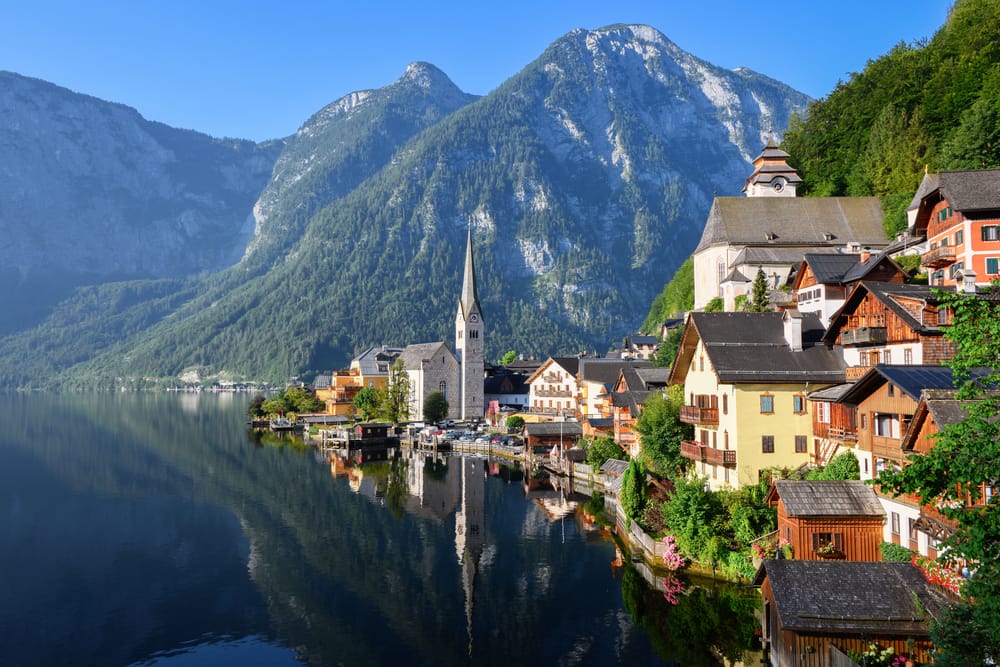
Salzburg and Hallstatt are the postcard, and we are not going to pretend otherwise. Salzburg is baroque, compact and wrapped in mountains, with a fortress on the hill and Mozart everywhere you turn. An hour away, Hallstatt sits between a lake and a cliff looking so implausible that photographs of it get accused of being fake. Go early, go off season, and go on a weekday if you would like to see it without four hundred other people.
Innsbruck is the one that makes the case for the whole country in a single view. A medieval old town with a golden roof, and then you look up and the Nordkette is directly above you, close enough that a cable car from the city centre puts you on a mountain in twenty minutes. Ski in the morning, sit in a courtyard with a beer by four. We are extremely easy to please when a city does that.
Sorting Your Cover
This is the one piece of admin that is not optional and not negotiable, because it is a stated condition of the visa rather than sensible advice.
Austria requires health, accident and travel insurance covering the full period of your stay, with a minimum of €30,000, valid across the Schengen area and including repatriation. Your policy documentation has to name you, state the coverage period and state the sum insured, and it gets checked when you apply. Cover that expires before your visa does is one of the more common reasons an otherwise solid application comes back.
Global Travel Cover sits in the Global Work & Travel family and is built for exactly this kind of trip: a $0 deductible on claims, buyable and renewable from anywhere in the world rather than only from home, and a 24/7 emergency line. The detail that matters most for Austria specifically is that snow sports are covered as standard rather than sold back to you as an add-on, which is not something you want to discover the hard way halfway down a red run in Tyrol.
If Austria Does Not Work Out
Plenty of readers will hit a wall here, and it is worth saying plainly. You might be over 30. Your country might not be on the list. You might have already used a working holiday visa somewhere Austria counts, or find that the year you want is not the year that suits your life. The once-only rule means it is worth waiting until you can properly commit rather than spending it badly.
If it is German-speaking Europe you want rather than Austria specifically, Germany shares the border, the language and a good deal of the alpine landscape, and it has routes in that Austria does not. The Germany working holiday visa guide covers that side in full.
Two structured trips run there, and both handle the accommodation question that makes the first month abroad so expensive:
- Au Pair in Germany (Flights Included): six to twelve months with a host family, ages 18 to 26, with your own room, meals and flights included in the trip.
- Tutor in Germany: one to three months mentoring children in a host family, open from 18 all the way to 39, which makes it one of the few options still available if the age caps have closed elsewhere.
Both come with a dedicated Trip Coordinator who walks you through the visa requirements rather than lodging anything for you, plus a host family confirmed before you fly and local support once you land. They cost more than arranging everything yourself. What you get for it is a landing that is already organised and someone to call when it is not.
Final Thoughts
Austria is a small country that behaves like a large one. Twelve months here buys you a ski season, a European rail network in every direction, a language worth having, and a year of living somewhere that has quietly worked out how to be pleasant to exist in.
It is also a single, unrepeatable shot, with a narrow application window and a set of rules that reward reading carefully. Which makes the only real question worth answering this: is next year the year you can actually go, or are you better off protecting the option until it is?
We also publish extensive working holiday visa guides for United States, Canada, Australia, United Kingdom, Germany, France, Spain, Italy, Ireland, Norway, Korea, Argentina, Chile, Hong Kong, Estonia, Netherlands, Austria, Slovakia, Portugal, Peru, Greece, Singapore, Malaysia, Taiwan, Mongolia, Indonesia, Vietnam, Thailand, New Zealand, Chile, Ecuador, Brazil, Israel, Czech
Republic, Mongolia, Papua New Guinea, and more coming.

Jessie Chambers
Jessie is a globetrotter and storyteller behind the Global Work & Travel blog, sharing tips, tales, and insights from cities to remote escapes, informed by the collective experience and real-world knowledge of teams across our business.